-
+86-15690533330
- shuangyangjixie@mail.ru
-
China, Hebei Province, Tangshan City, Caofeidian District, SME Industrial Park, South Side of Zhi'er Road


+86-15690533330
China, Hebei Province, Tangshan City, Caofeidian District, SME Industrial Park, South Side of Zhi'er Road
2026-05-24
content
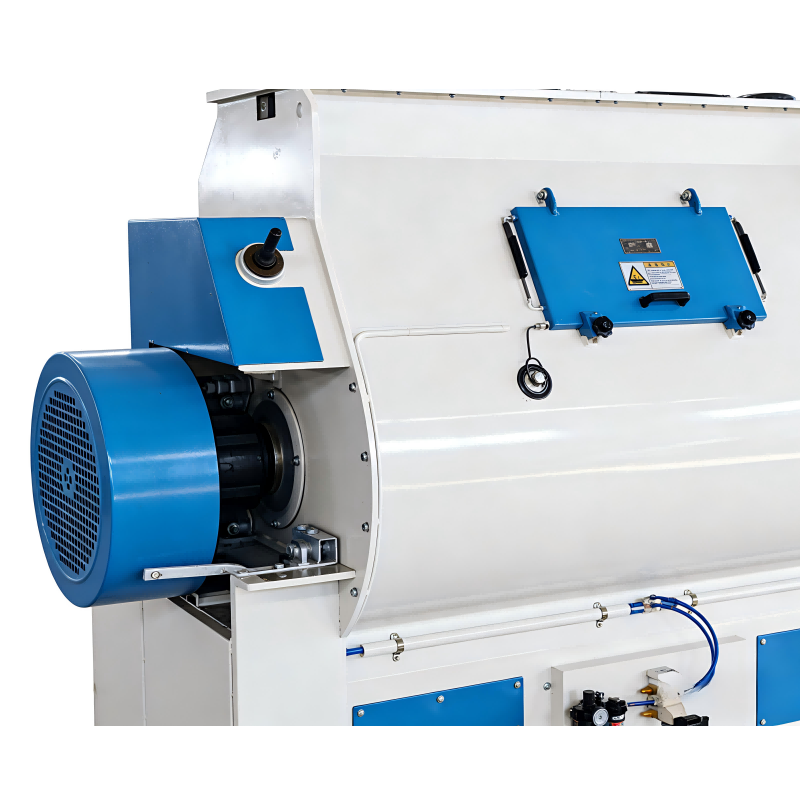
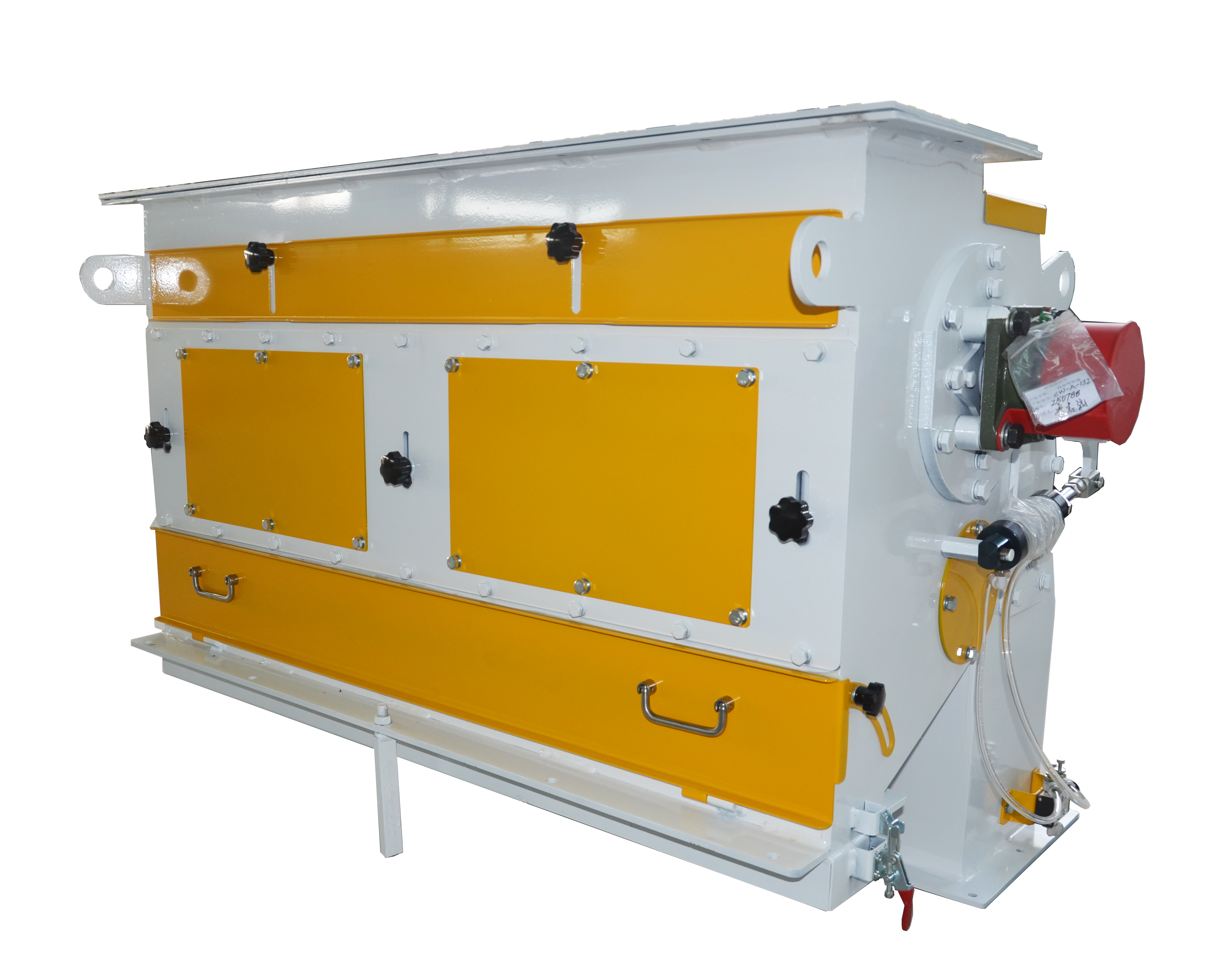
A hammer crusher is not just a machine on a processing line. This is the point where it is decided whether the pellet will go into the feed department without clogging or stop the conveyor due to a clogged feeder. We saw how one incorrectly selected SFSP-60 model caused 3-4 downtime per week at a feed mill near Kazan: the hammers were ground in 12 shifts, and the output fraction “floated” from 0.8 to 2.5 mm. Real case. And the real solution is not a replacement with a “more powerful” one, but a competent calculation for a specific material, humidity and operating mode.
In the food, feed and chemical industries, millimeter particle size tolerances are rarely required. More often, a stable, homogeneous fraction in the range of 0.5–3 mm is needed for uniform mixing, better absorption in the gastrointestinal tract of animals or subsequent extrusion. Here the hammer crusher outperforms its jaw, cone and roller counterparts: it is simpler, more reliable and cheaper to operate. Its principle is impact-abrasion. The material enters a chamber where it is beaten by rotating hammers and then sifted through a screen. The size of the fraction is set only by its cell - no complex pressure adjustments or gaps.
But not all hammer crushers are created equal. We met customers who bought “at the price” and received a body made of 3 mm sheet instead of 8 mm, hammers made of ordinary steel instead of hardened 65G, and a grate without heat treatment. After three months, the grille deflects, energy consumption increases by 22% and constant downtime for replacement. A real hammer crusher must operate for 72 hours without stopping - not “according to the passport”, but in real conditions: dusty, with raw material humidity up to 16%, at an ambient temperature from −25 °C to +40 °C.
“The power is 110 kW, which means it will shred everything.” That's what they think. But a hammer crusher is not an electric motor. Its performance depends on three factors: the density of the material, its humidity and the fractional composition at the inlet. For example, wheat with 13% moisture yields 8.2 t/h at SFSP-60. And corn with 15% moisture is only 6.1 t/h. At the same time, energy consumption increases by 18%. We always make calculations based on real samples: we take 5 kg of your raw materials, carry out a test grinding and build a graph of the relationship “humidity → productivity → energy consumption.” This is the only way to choose between SFSP-60 and SFSP-66 - and not overpay for the extra 20 kW that will be idle.
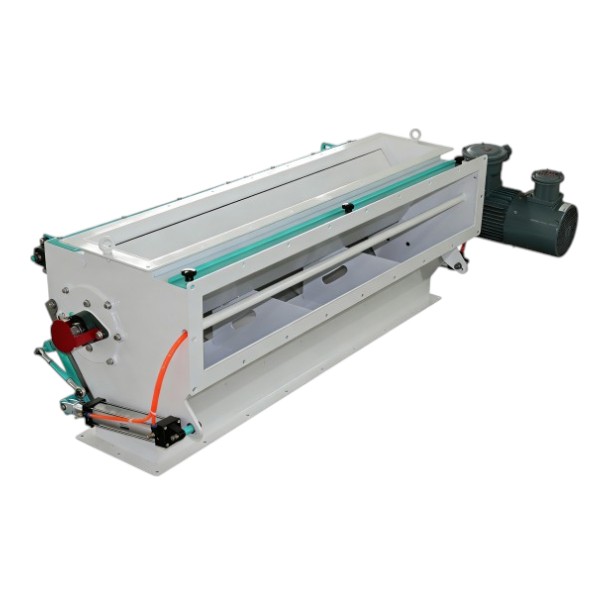
Another common mistake is ignoring the feed system. The crusher does not tolerate “jumps”: if the screw feeder supplies a portion, then a pause, the rotor is overloaded, the hammers hit the void, and then the mass. The result is increased wear, vibration, and destruction of bearings. Our feeders with a cleaning system and adjustable feed speed are included in the delivery package. They “adapt” to the crusher, and not vice versa.
Not because it's cheaper. But because it works. The service center in Moscow replaced the grille with an SFSP-66 in 4 hours - with the delivery of spare parts from the warehouse and the visit of an engineer. The second order arrived 38 months later: not because of a breakdown, but because of the expansion of the line. The client said, “You didn’t promise forever. You promised and delivered: 3 years without major repairs, consumables on schedule, documentation that can be read, not deciphered.”
Tangshan Shuangyang Machinery Equipment Co.,Ltd is not an intermediary. This is a Russian legal entity with its own service centers, a spare parts warehouse and engineers who themselves installed crushers at 17 sites. We don't sell "the box". We sell guaranteed fraction yield, stable energy consumption and no downtime. Because the hammer crusher is not a line element. She is her rhythm.


![Efficient Feed Hammer Crusher In Stock | [Shuangyang Feed Making Equipment]](https://ecdn.cnyandex.com/jlgo93c/uploads/养鸡场自建饲料厂.png)