-
+86-15690533330
- shuangyangjixie@mail.ru
-
China, Hebei Province, Tangshan City, Caofeidian District, SME Industrial Park, South Side of Zhi'er Road


+86-15690533330
China, Hebei Province, Tangshan City, Caofeidian District, SME Industrial Park, South Side of Zhi'er Road
2026-05-31
content
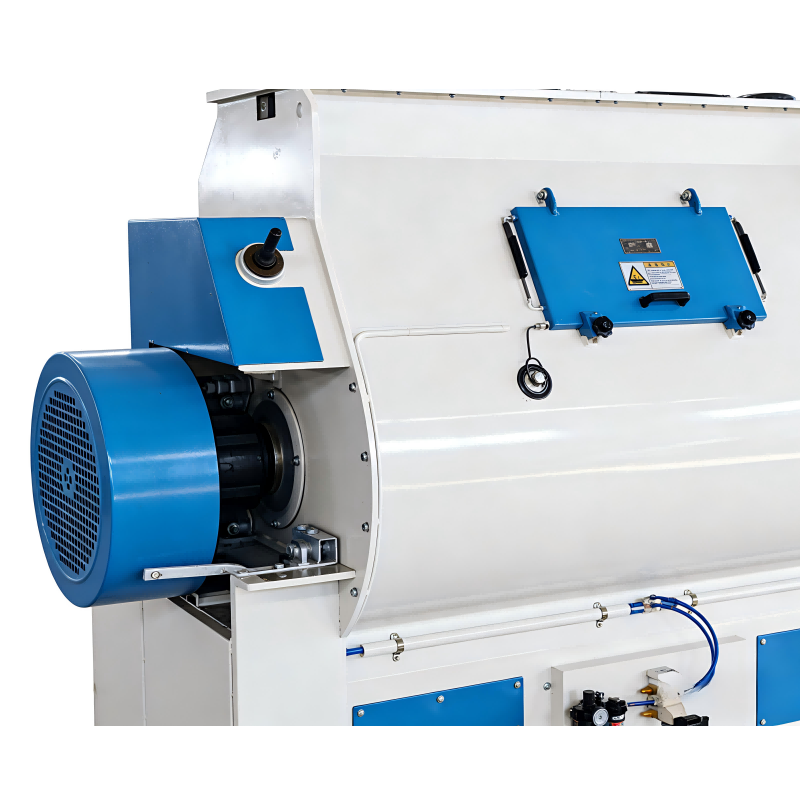
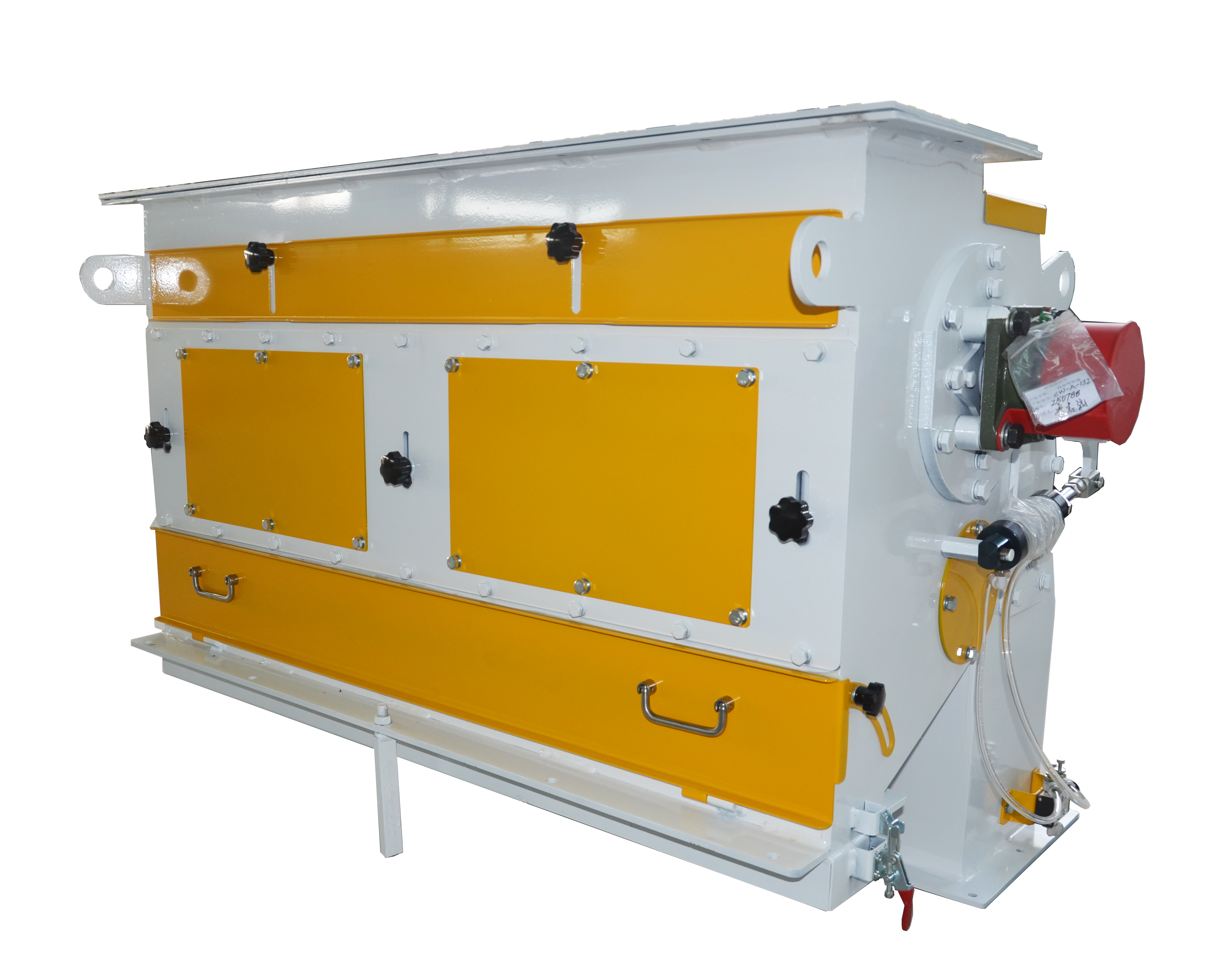
A feed crusher is not just a machine in the corner of a workshop. This is the point where up to 12% of raw materials are lost through manual or outdated processing. We've seen this dozens of times: granules with cracks, uneven grinding, engine overheating after 45 minutes of operation, downtime due to grid clogging. A real farm does not forgive such mistakes. A feed crusher is a guaranteed stable supply of a homogeneous product to a mixer or press granulator. And the choice here determines not only the quality of the feed, but also the service life of the entire line.
In practice, three types of shredders compete on Russian farms. But only impact hammer feed crushers provide the required flexibility: from coarse crushing of wheat before the meal to fine grinding of pellets after the extruder. Blade units quickly dull on hard ingredients, such as corn with a high gluten content. Disk models give a sharp jump in energy consumption when the humidity of the raw material changes above 14%. Hammerheads are adaptive. In real tests on a farm in the Kaluga region, the SFSP-66 series crusher maintained a stable productivity of 3.8 t/h even when barley moisture fluctuated from 12.5% to 15.7%. The key is in the system for adjusting the gap between the hammers and the grid and in balancing the rotor according to GOST R ISO 21940.
In 73% of cases of feed crusher failures, we identify one reason: the design does not match the operating conditions. Not the engine power, not the brand, but the design. For example, standard C3 class bearings cannot withstand vibration when operating on wet mixtures without first drying. Or - a frame made of 3 mm sheet bends during frequent starts/stops, disrupting the alignment. We introduced a reinforced frame made of 80x80x4 mm profile pipe and bearings with an increased safety margin - this reduced service downtime to 0.8 hours per year per unit of equipment. Another pitfall is the grille cleaning system. On many models it is mechanical and requires stopping the line every 2.5 hours. Our crushers have automatic pneumatic cleaning at a specified interval (from 15 seconds to 10 minutes), controlled by PLC. It works non-stop, maintaining 98.4% of the declared productivity per day.
The choice begins not with price, but with three numbers:raw material moisture, maximum piece size, required output fraction size. If your corn comes from a field with a moisture content of 22-24%, you need a crusher with pre-drying or at least with an increased ventilation system for the frame. If you are processing finished pellets of 4–6 mm, a grid with 2.5 mm holes and a rotor with a rotation speed of 3000 rpm are sufficient. But for secondary crushing of whole grains, you need a rotor with a double set of hammers and a grid with variable pitch. We always make calculations for specific raw materials: we measure density, humidity, abrasiveness. This is the only way to avoid overloading the drive or premature wear of the hammers. The average service life of a set of hammers in our crushers is 420 hours when working on a feed mixture. For comparison: standard analogues have 210–260 hours.
We supply feed crushers not as a product, but as part of a technological chain. Each unit comes with an EAEU declaration of conformity, full documentation in Russian and a QR code on the case leading to a video guide for installation. But the main thing is support. We have authorized service centers in Moscow and St. Petersburg. The engineer will arrive within 48 hours - not “within a week,” but exactly 48. He will check the balancing of the rotor, measure the gaps, and test the cleaning system. And it will do this not according to instructions, but according to data from your actual operating conditions: pressure in the pneumatic system, bearing temperature, vibration frequency. This approach allowed us to reduce the number of repeat calls to 2.3% - against the market average of 14–17%. Because we didn't sell the equipment. We've built it into your work.
A feed crusher is not an expense, but an investment in stability. In every kilogram of evenly crushed raw material there is less loss, higher digestibility of feed, lower load on subsequent nodes of the line. Tangshan Shuangyang Machinery Equipment Co., Ltd. designs it so that the first replacement of hammers takes place not in a month, but in a season. So that the stop is planned - and not emergency. So that you know that behind this name there is not just a plant in Tangshan, but an engineer who has already seen your problem - and solved it.


![Efficient Feed Hammer Crusher In Stock | [Shuangyang Feed Making Equipment]](https://ecdn.cnyandex.com/jlgo93c/uploads/养鸡场自建饲料厂.png)