-
+86-15690533330
- shuangyangjixie@mail.ru
-
China, Hebei Province, Tangshan City, Caofeidian District, SME Industrial Park, South Side of Zhi'er Road


+86-15690533330
China, Hebei Province, Tangshan City, Caofeidian District, SME Industrial Park, South Side of Zhi'er Road
2026-05-15
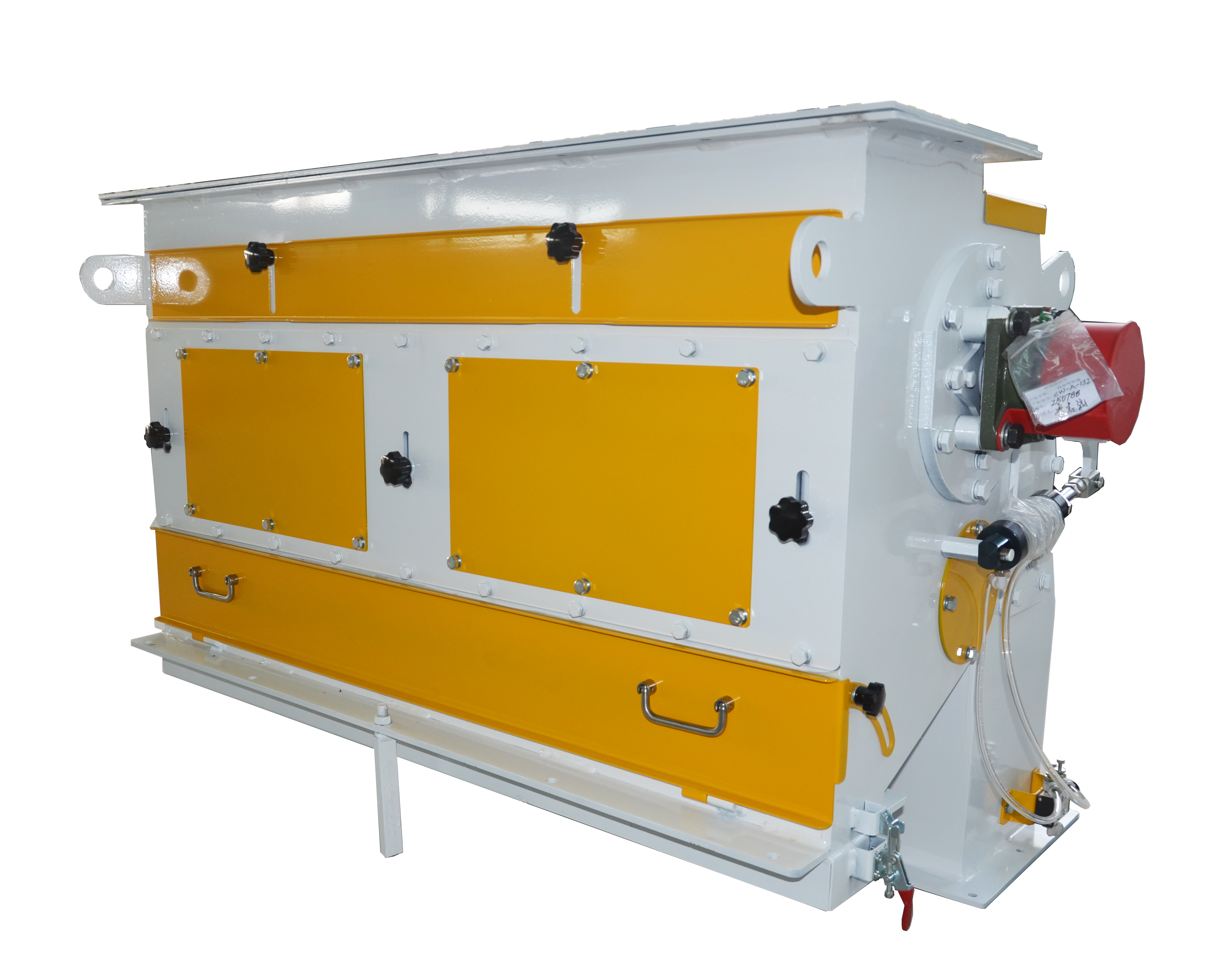
Hammer chopper: the “heart” and “efficiency engine” of a modern feed mill
In the highly intensive production process of the modern feed mill industry, if we say that the formulation is the “soul” of the feed, then the hammer chopper undoubtedly plays the role of the “heart”. This is the first key operation in feed processing, and the quality of its operation directly determines the smoothness of subsequent technological processes, the quality of the final product and the overall economic efficiency of the entire plant. As an experienced industry professional, I believe its importance comes from the following four aspects:
The basis of quality: the grinding granulometry determines the “efficiency of digestion” of the feed
The nutritional value of compound feed is ultimately realized through digestion and assimilation by animals. The hammer grinder achieves the following critical goals by physically crushing raw materials:
Optimization of digestibility: suitable grinding granulometry significantly increases the surface area of the raw material, which allows the digestive enzymes in the body of birds and animals to contact and react more fully, thereby significantly increasing the digestibility and absorption of nutrients. For example, for laying hen feed, a powder with a uniform granulometry (usually controlled in the range of 0.8 - 1.2 mm) can effectively prevent selective feed intake and ensure uniform nutrient intake.
Guaranteed mixing uniformity: Grinding is a prerequisite for mixing. Only after different feedstocks (e.g. corn, soybean meal, pre-mix) have been ground to approximately the same particle size can a truly uniform distribution in the downstream mixer be ensured, preventing local concentrations of certain micronutrients (e.g. vitamins, drugs) from rising or falling, and ensuring that each piece of feed is as formulated.
Impact on pelleting quality: For feed that needs to be pelleted, the grinding granulometry directly affects the hardness of the pellets, their grindability and durability. Raw materials with too coarse granulometry lead to a loose granule structure, high grindability and losses; Feedstock that is too fine can lead to increased energy consumption during granulation and even clogging of the die openings.
Thus, the hammer mill is the first quality control step in converting the formulation into actual nutritional value.
Cost core: the “main battlefield” of electricity and losses
In total production consumption of a feed mill, energy consumption for the grinding operation is usually more than 60%. Therefore, the efficiency of the hammer mill becomes a key factor in cost management.
Direct energy consumption: Modern hammer choppers, by optimizing rotor dynamics, using highly efficient electric motors and variable frequency technology, can significantly reduce energy consumption per ton of feed. Each reduction of 0.1 kWh/t for a feed mill with an annual production of 100,000 tons means savings of several tens of thousands of rubles on electricity per year.
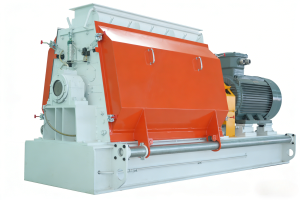
Cost of replacement of worn parts: Hammers and screens are the main worn parts. High wear resistance hammers and scientific design can extend the replacement period, directly reducing maintenance costs and downtime.
Loss Control: A good shredder should be equipped with a highly efficient dust collection system that allows dust to be collected and used from useful raw materials, reducing waste and creating a clean production environment.
Choosing a high-performance hammer grinder is essentially a long-term investment with high returns.
Capacity limit: defines the “throughput speed” of the production line
The grinding process is often the productivity limitation of the entire production line. The performance of the shredder directly limits the performance of subsequent operations such as mixing, granulating, packaging. A shredder with insufficient capacity or unstable operation will cause the entire production line to be “under-performing” and unable to achieve its design capacity, resulting in wasted resources and low efficiency. Therefore, when designing a plant and selecting equipment, the capacity of the shredder must be within a certain margin, and it must be ensured that it operates reliably to ensure that the production plan is met.
Safety: Dust explosion is one of the major safety hazards in a feed mill. Modern hammer shredders must be equipped with a highly efficient pulsed dust collection system that strictly controls the dust concentration in the grinding chamber within a safe level (e.g. ≤10 mg/m³) and have an explosion-proof design to completely eliminate safety hazards.
Environmentally friendly: Low-dust and low-noise operation complies with increasingly stringent environmental regulations and is a manifestation of the company's social responsibility, which contributes to maintaining good relations with the local community.
Conclusion
Thus, the hammer grinder is far from being a simple grinding device. It is the link between quality, cost, efficiency and safety in a feed mill. Investing in a modern hammer mill with high reliability and stable performance (e.g. models with multi-chamber grinding technology, infinite gap adjustment, etc.) is the key to creating a strong competitive position for a feed mill. In a highly competitive market, focusing on and optimizing this “heart” can often bring unexpected efficiency gains, which is a smart move for a business to achieve sustainability.


![Efficient Feed Hammer Crusher In Stock | [Shuangyang Feed Making Equipment]](https://ecdn.cnyandex.com/jlgo93c/uploads/养鸡场自建饲料厂.png)